At the Park
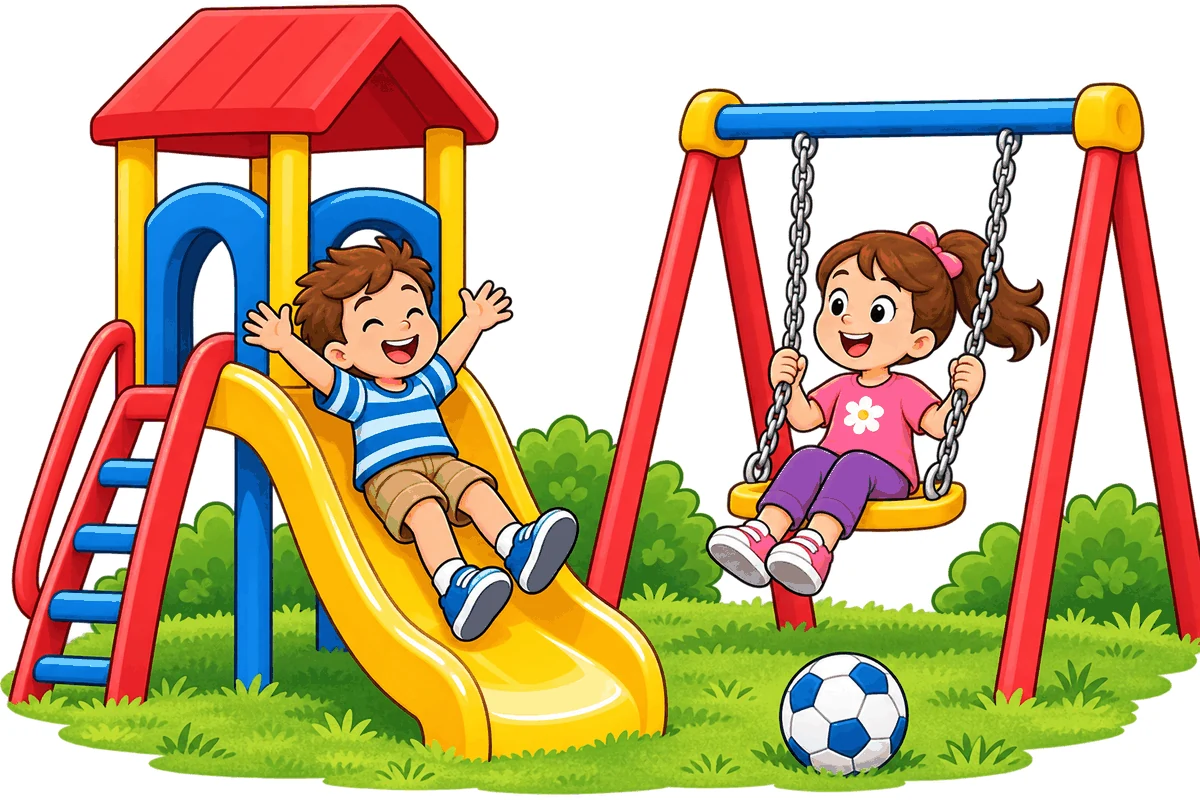
This sight word fluency passage gives Grade 1 students a short illustrated playground story built to repeat four irregular high-frequency words: was, they, have and said.
This sight word fluency passage targets four words a Grade 1 reader cannot sound out reliably — was, they, have and said — inside a short playground story.
Why a sight word fluency passage beats flashcards here
Some sight words are common but regular, and a child who sounds them out gets the right answer. The four in this passage are not like that. A child who decodes "said" letter by letter produces something that is not a word. "Have" breaks the rule that a final e makes the vowel long. "Was" sounds nothing like it looks. "They" uses a vowel team most first graders have not met.
Words like these have to be stored as whole shapes, and that happens through repeated encounters in real sentences rather than through phonics rules that do not apply to them.
Fluency, not just recognition
Recognising a word on a flashcard and reading it without pausing in the middle of a sentence are different skills, and the second is what fluency means. A child can know "said" perfectly well in isolation and still stop dead when it appears in dialogue.
That is why this passage puts the target words in varied positions: starting a sentence, inside quoted speech, after a name. The repetition is built in — was, they and have appear three times each and said twice — but the surroundings change each time, so the child is not simply recognising a familiar phrase.
What is on the sheet
The word hunt comes first. Finding and counting each target forces close attention to its shape, and gives a child who cannot read the whole passage alone something they can complete successfully.
Two circle-the-answer questions follow, then one written answer about how the day was. That last one is deliberately open: "fun", "fast" and "a good day" all come straight out of the text, so a child who read it has several correct options and is unlikely to be stuck.
Reading it aloud first
This passage has two speakers, and dialogue is harder than narration for a beginning reader because the voice changes without warning. Reading it aloud together once, with the adult taking Tom and Mia, makes the second read markedly smoother.
That is standard practice rather than a shortcut. Repeated reading of the same short text is one of the better-evidenced ways to build fluency at this age, and the second or third read is where the gain shows up.
What progress looks like
Watch the pause rather than the mistake. A child who reads "said" correctly but stops for a beat before it has not stored the word yet; a child who reads straight through has. That pause is the thing this sheet is working on, and it disappears gradually over many short readings rather than suddenly.
Counting the target words is a means, not the point. If a child finds two of the three "was"es and reads the story fluently, the sheet has done its job. Correcting the count while ignoring the fluent reading sends exactly the wrong signal about what matters.
How to use this worksheet
The sheet prints on one page with answers on a second and takes about fifteen minutes. It pairs with the first sight word passage in this set, which targets the easier group — the, and, can and come. Doing that one first is worth it if a child is not yet secure on those.
For what comes next, our English worksheets include sequencing and who-what-where comprehension, and the guide to Grade 1 reading passages sets out the order. The Reading Rockets fluency pages explain the repeated-reading research in plain language.
Try these questions online
Answer these five questions about the story and check them instantly.
- How many times does the word "was" appear in the story?
- How many times does the word "they" appear?
- Who goes down the slide?
- Who has a ball?
- How many times does the word "said" appear?