The Big Bus
This sight word reading passage gives Grade 1 students a short illustrated story built to repeat four of the most common words in English: the, and, can and come.
This sight word reading passage is built to repeat four of the most common words in English, so a Grade 1 reader meets each one several times in a story that still makes sense.
What a sight word reading passage is for
Sight words are the words too common to sound out every time and often too irregular to sound out at all. The, and, come, said, you, was. Together they make up a large share of everything a child will ever read, so recognising them instantly is what separates halting reading from fluent reading.
Flashcards drill these words in isolation. A passage does something different: it puts the word back where the child will actually meet it, surrounded by other words, carrying meaning. Both have a place, and the passage is the one that transfers.
How this passage is built
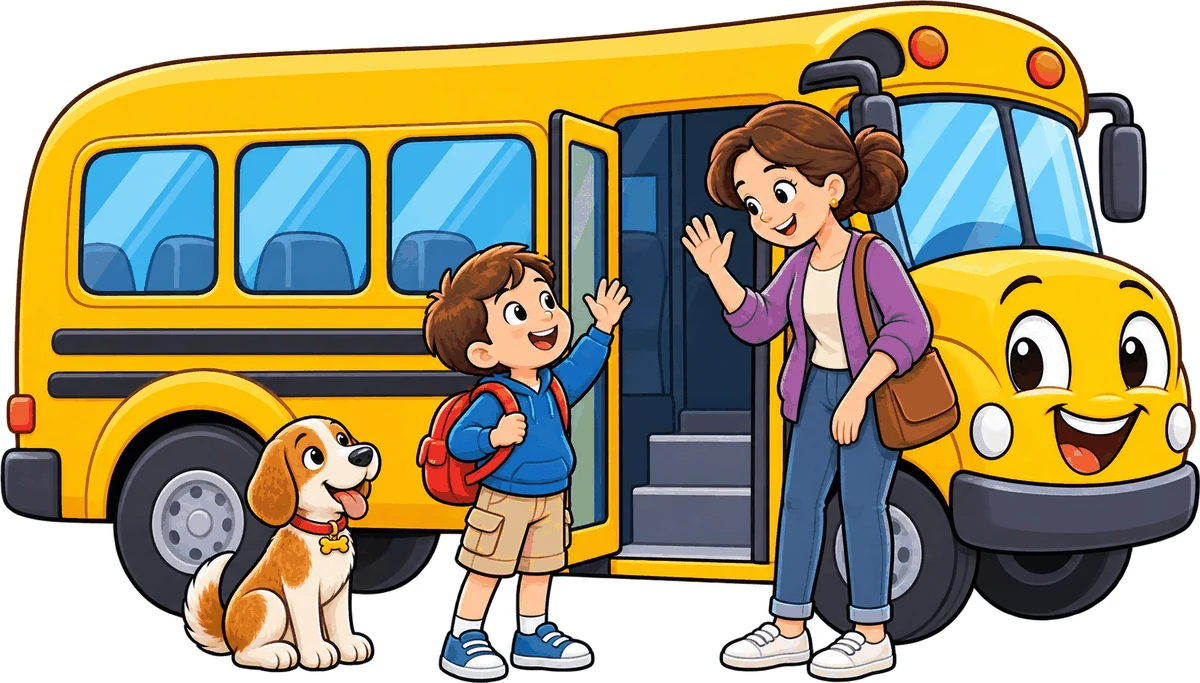
The story is written so that four target words — the, and, can and come — each appear several times. "The" appears five times, "and" and "can" three times each, "come" twice. That is deliberate repetition, but it is hidden inside a story about catching a bus rather than a list of sentences that obviously exist to repeat a word.
Children notice when a text is fake. A passage that reads "I can run. I can jump. I can hop." teaches the word but teaches nothing about reading, because no one writes like that. This one has dialogue, an exclamation and a dog, and the repetition still gets done.
Counting, then reading
The first task asks the child to find each target word and count it. Hunting for a word forces close attention to its shape, which is exactly what sight recognition is built from. It also gives a child who cannot yet read the whole passage independently a job they can succeed at.
The two comprehension questions come after, and they check the child was reading the story rather than only scanning it for word shapes. That order matters: if comprehension came first, the word hunt would feel like busywork after the real task.
Writing one sentence
The last task asks the child to write their own sentence using "come". Producing a word is harder than recognising it and is the better test of whether it is truly known. The key notes that spelling elsewhere in the sentence does not matter — the target word is what is being assessed, and correcting every word of a first grader's sentence discourages them from writing a long one next time.
Which words to target next
The four here are among the very highest frequency words in English, which is why they come first. Once they are secure, the next band worth drilling in a passage is said, was, you, they and have — all common, all irregular enough that sounding them out leads a child astray. The second sight word passage in this set targets exactly those.
How to use this worksheet
The sheet prints on one page with answers on a second, and takes about fifteen minutes. Reading it aloud together first is worth doing, because the dialogue is easier to follow when a child has heard where the voices change.
Finding most of a target word's appearances counts as success. A child who finds four of the five "the"s has done the thing that matters, and telling them so is more useful than correcting the count.
For the next step, our English worksheets include sequencing and who-what-where passages, and the guide to Grade 1 reading passages explains how these fit together. The Reading Rockets pages on sight words cover the research for parents who want it.
Try these questions online
Answer these five questions about the story and check them instantly.
- How many times does the word "the" appear in the story?
- How many times does the word "and" appear?
- What colour is the bus?
- Who says "Come and see the bus"?
- What is the dog called?