Place Value for Grade 3: Teaching Guide, Practice Quiz and Free Worksheets
In Grade 3, place value means understanding that each digit's position gives it a different value. In 476, the 4 means 4 hundreds, the 7 means 7 tens, and the 6 means 6 ones. Grade 3 students work with numbers up to 1,000 — reading them, writing them in expanded form, comparing them and rounding them.
This guide covers what Grade 3 students are expected to know in both the Ontario and Common Core curricula, the five mistakes children actually make and how to fix each one, a free 10-question quiz, and printable worksheets. It is written by a practising teacher, not generated from a template.
TL;DR — Grade 3 Place Value at a Glance
By the end of Grade 3, a student should be able to:
- Read and write any number to 1,000 in words, digits and expanded form.
- Name the value of each digit — the 5 in 350 is worth 50, not 5.
- Compare and order three-digit numbers using < and >.
- Round to the nearest 10 and 100.
The single most common stumbling block is the zero placeholder — reading 407 as "forty-seven". If a child can read 407 correctly, most of the rest follows.
1. What Place Value Means in Grade 3
Place value is the idea that a digit's worth depends on where it sits. The digit 4 is worth four ones in 264, forty in 247, and four hundred in 476. The symbol never changes; the position does all the work.
The clearest way to show this is a place value chart. Here is 476:
Read down the chart and you get the expanded form: 400 + 70 + 6 = 476. Read across and you get the standard form: 476. Say it aloud and you get the word form: four hundred seventy-six.
Grade 3 is where place value stops being about naming columns and starts being the foundation for everything else. Regrouping in addition and subtraction, rounding, estimating and eventually multi-digit multiplication all depend on it. A child who is shaky on place value in Grade 3 will struggle with subtraction across zeros in Grade 4 — and the cause will look like a subtraction problem when it is really a place value problem.
2. What Grade 3 Students Are Expected to Know
The expectations are close in Ontario and the United States, but the wording and the number range differ slightly. Most place value resources online cover only the American standards, so here is both.
| Skill | Ontario (Grade 3, Number B1) | Common Core (Grade 3) |
|---|---|---|
| Number range | Whole numbers up to 1,000 | Up to 1,000 (3.NBT) |
| Reading and writing | Read, represent, compose and decompose to 1,000 | Read and write to 1,000 |
| Expanded form | Compose and decompose using place value | Expanded form to 1,000 |
| Comparing | Compare and order whole numbers to 1,000 | Compare using >, =, < |
| Rounding | Round to the nearest 10 and 100 | Round to nearest 10 and 100 (3.NBT.A.1) |
| Estimation | Estimate quantities to 1,000 | Use rounding to estimate |
Sources: the Ontario expectations are set out in B1. Number Sense, Grade 3 Mathematics on the Ontario curriculum site; the American ones in the Common Core 3.NBT standards.
The practical difference is small. Ontario puts more weight on composing and decomposing numbers in several ways — recognising that 476 is 4 hundreds, 7 tens and 6 ones, and also 47 tens and 6 ones. That second form catches many students out, and it is worth practising explicitly.
3. Five Mistakes Grade 3 Students Make
These are the errors that come up year after year. Each one has a specific cause, and each has a fix you can try tonight.
Mistake 1 — Reading 407 as "forty-seven"
What the child does: Sees 407 and says "forty-seven", or writes 47 when asked to write four hundred seven.
Why it happens: The zero looks like nothing, so the child skips it. They are reading the digits they can name rather than reading the positions.
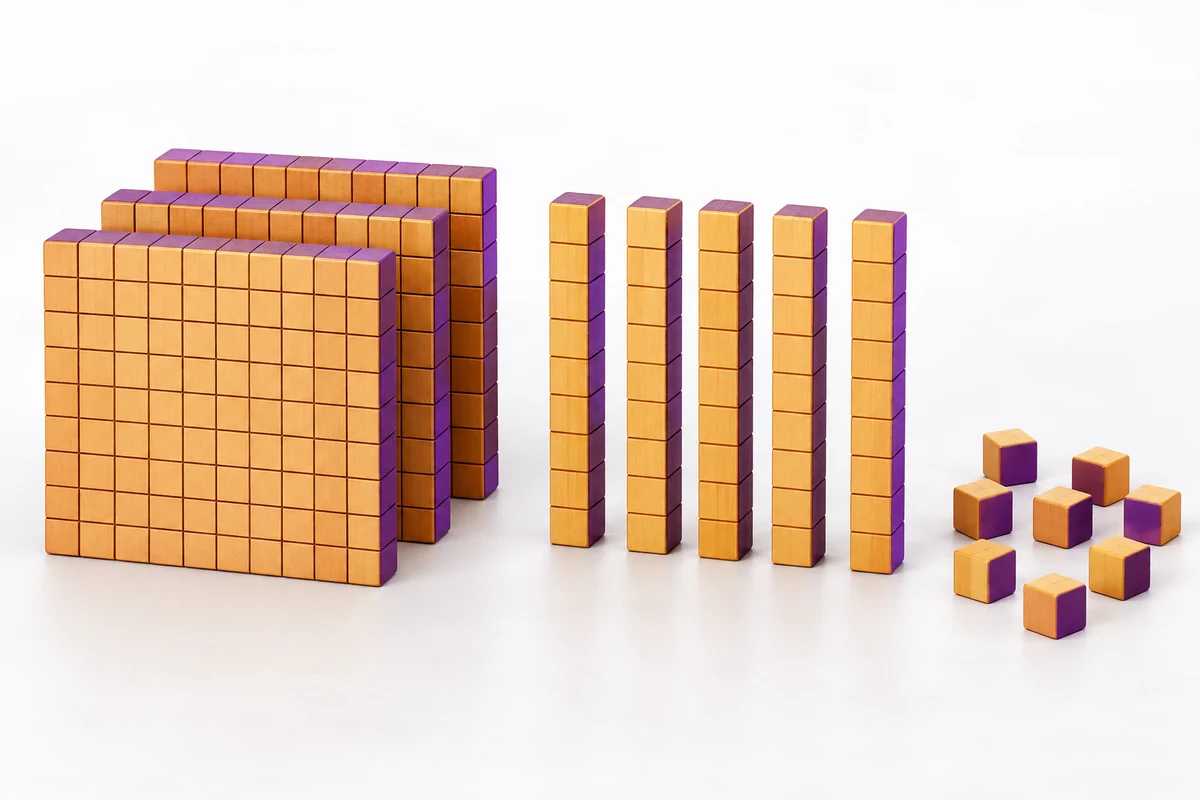
The fix: Build 407 with base-ten blocks — 4 hundred-flats, no ten-rods, 7 unit-cubes. Ask where the tens are. The empty space makes the zero's job visible in a way the symbol never does. Then write it in a place value chart with the tens column deliberately left blank before filling in the 0.
Mistake 2 — Thinking the 5 in 350 is worth five
What the child does: Asked for the value of the 5 in 350, answers "5" instead of "50".
Why it happens: They are naming the digit rather than its value. The question "what is the value of the 5" sounds like "what digit is that".
The fix: Change the question. Instead of "what is the value of the 5", ask "if you took the 5 away, how much smaller would the number be?" 350 minus 50 is 300 — the answer becomes obvious and self-checking.
Mistake 3 — Writing expanded form as 3 + 5 + 0
What the child does: Writes 350 in expanded form as 3 + 5 + 0 rather than 300 + 50 + 0.
Why it happens: They have learned expanded form as "split the digits up" instead of "split the value up". The procedure was memorised without the meaning.
The fix: Have them check by adding. 3 + 5 + 0 = 8, which is nowhere near 350. Getting into the habit of adding the expanded form back up catches this error every time, without you having to mark it.
Mistake 4 — Saying 89 is bigger than 100
What the child does: Compares 89 and 100 and picks 89, often because 8 and 9 are "big digits" and 1 and 0 are "small digits".
Why it happens: They are comparing digits left to right without first comparing how many digits each number has.
The fix: Teach counting the digits first. Three digits always beats two digits for whole numbers. Only when the digit counts match do you compare left to right. Two steps, always in that order.
Mistake 5 — Losing the columns when regrouping
What the child does: In 352 − 168, regroups from the wrong column, or carries a 1 into the hundreds when it belonged in the tens.
Why it happens: This is almost always a place value problem wearing a subtraction costume. The child does not have a firm sense of what the columns mean, so the borrowed 1 has no meaning to anchor it.
The fix: Go back to place value before going back to subtraction. Practise trading 1 hundred for 10 tens with physical blocks until it is automatic. Re-teaching the subtraction algorithm without fixing the underlying place value rarely holds.
Ten auto-graded questions covering expanded form, digit values, comparing and rounding — instant feedback on each one, no sign-up needed. Take the Grade 3 place value quiz →
4. How to Teach Place Value at Home
None of these need anything you would have to buy. Ten minutes each is enough.
Build the number, then say it
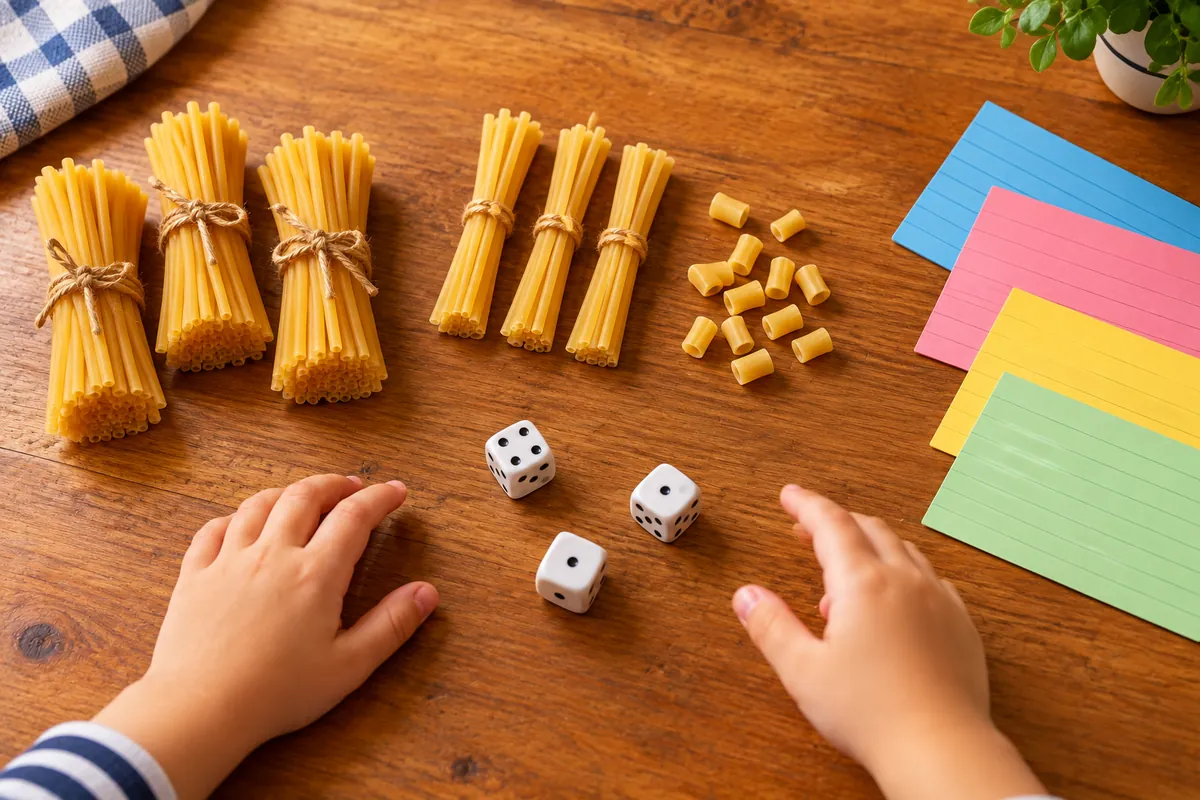
Use anything groupable — dried pasta, coins, LEGO. Bundle into tens and hundreds, build a number, then say it aloud and write it. Going physical → spoken → written in that order is what makes the connection stick. Most children can write numbers correctly long before they understand them, which hides the gap.
The three-dice game
Roll three dice. The child arranges them into the largest possible three-digit number, and explains why. Then the smallest. This forces them to reason about position rather than digit size, and it takes two minutes. Play it enough and Mistake 4 disappears on its own.
Expanded form cards
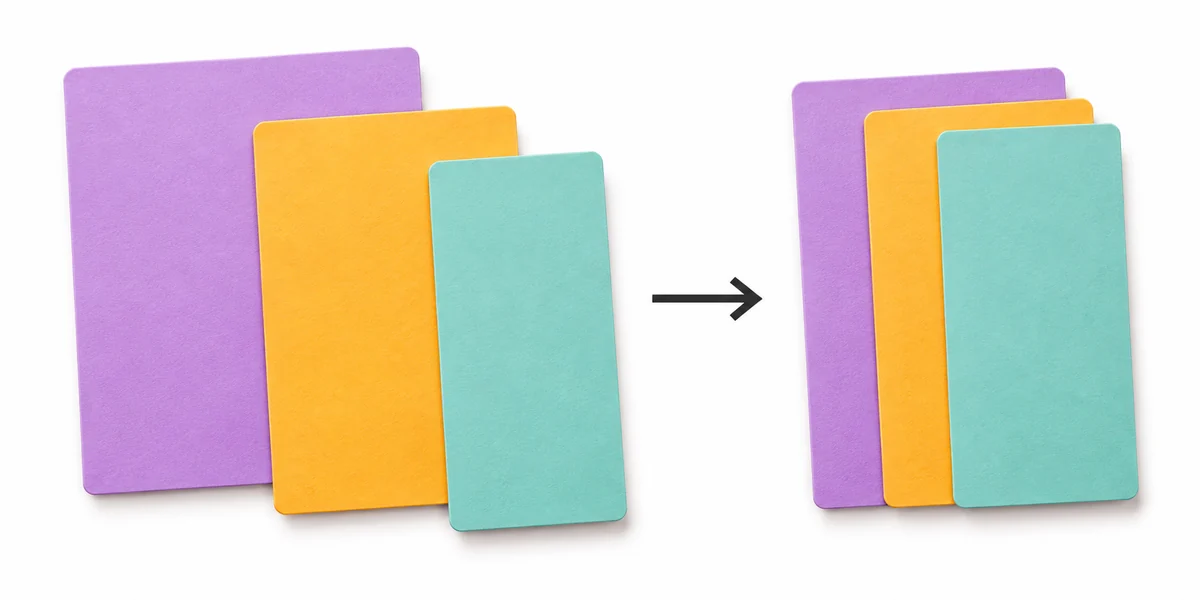
Write 300, 50 and 6 on three index cards and overlap them so they read 356. Pulling the cards apart and pushing them together is the clearest physical model of expanded form there is, and it directly targets Mistake 3.
Number of the day
Pick a number each morning. The child writes it in digits, words and expanded form, says what each digit is worth, and rounds it to the nearest 10 and 100. Five minutes, covers the entire Grade 3 expectation set, and the repetition is what builds fluency.
Spend longer on place value than feels necessary. Three to four weeks is normal in a Grade 3 classroom. It looks slow because the individual tasks are easy, but the depth of understanding built here is what determines whether Grade 4 and 5 arithmetic goes smoothly. Rushing place value is the most common cause of trouble later.
5. Free Grade 3 Place Value Worksheets
Each of these is a printable PDF with an answer key. They are listed by the mistake they target, so you can pick the one that matches what you are seeing.
- Place Value Charts to 1,000 PDF · 2 pages Fill in hundreds, tens and ones for eight numbers, then name what each digit is worth. Start here if the columns are shaky. Targets Mistakes 1 and 2.
- Expanded Form Practice PDF · 2 pages Write numbers in expanded form and convert back, plus a spot-the-mistake section. Targets Mistake 3.
- Comparing and Ordering to 1,000 PDF · 2 pages Ten pairs to compare, four sets to order, and making the biggest and smallest number from three digits. Targets Mistake 4.
- Rounding to the Nearest 10 and 100 PDF · 2 pages Sixteen numbers to round, then three drawn number lines to mark. Covers the Grade 3 rounding expectation.
- Place Value Word Problems PDF · 2 pages Twelve problems applying place value to real situations. Use once the four above are solid.
Every sheet has its answer key on page 2, so you can print page 1 as a class set.
Frequently Asked Questions
What is place value in Grade 3?
Place value in Grade 3 means understanding that a digit's value depends on its position in a number. In 476, the 4 is worth 400, the 7 is worth 70 and the 6 is worth 6. Grade 3 students apply this to numbers up to 1,000 when reading, writing, comparing and rounding them.
What numbers should a Grade 3 student be able to read and write?
Grade 3 students should read and write whole numbers up to 1,000 in three forms: standard form (476), word form (four hundred seventy-six) and expanded form (400 + 70 + 6). This is the expectation in both the Ontario curriculum and the Common Core standards.
What is expanded form in Grade 3?
Expanded form breaks a number into the value of each digit added together. 476 in expanded form is 400 + 70 + 6. The common error is writing 4 + 7 + 6, which uses the digits instead of their values. Adding the expanded form back up is a quick way to check it.
Why does my child read 407 as "forty-seven"?
The zero is being skipped because it looks like nothing. The child reads the digits they can name rather than the positions. Building 407 with base-ten blocks — 4 hundreds, no tens, 7 ones — makes the empty tens column visible and usually fixes it quickly.
How do I teach place value at home without buying anything?
Use dried pasta, coins or LEGO bundled into tens and hundreds to build numbers physically, then say and write them. Roll three dice and make the largest and smallest three-digit numbers. Write 300, 50 and 6 on cards and overlap them to show 356. Ten minutes a day is enough.
When should I worry that my child is behind on place value?
By the end of Grade 3, a child who still cannot say what the 5 in 350 is worth, or who reads 407 as "forty-seven", needs targeted practice before moving on. These specific gaps cause visible trouble with subtraction and multiplication in Grade 4. Speak to their teacher — caught in Grade 3, it is usually a few weeks of work.
Curriculum references: Ontario Grade 3 Mathematics, B1 Number Sense · Common Core 3.NBT. Last reviewed September 2026.
Practice Grade 3 Place Value
Free printable worksheets and auto-graded quizzes, no sign-up required.
Browse Grade 3 Math Worksheets