The Little Seed
This sequencing events worksheet gives Grade 1 students a four-sentence story about a seed growing into a flower, then asks them to put four mixed-up pictures and four mixed-up sentences back in order.
This sequencing events worksheet gives Grade 1 students a four-step story about a seed, then asks them to put the pictures and the sentences back in order separately.
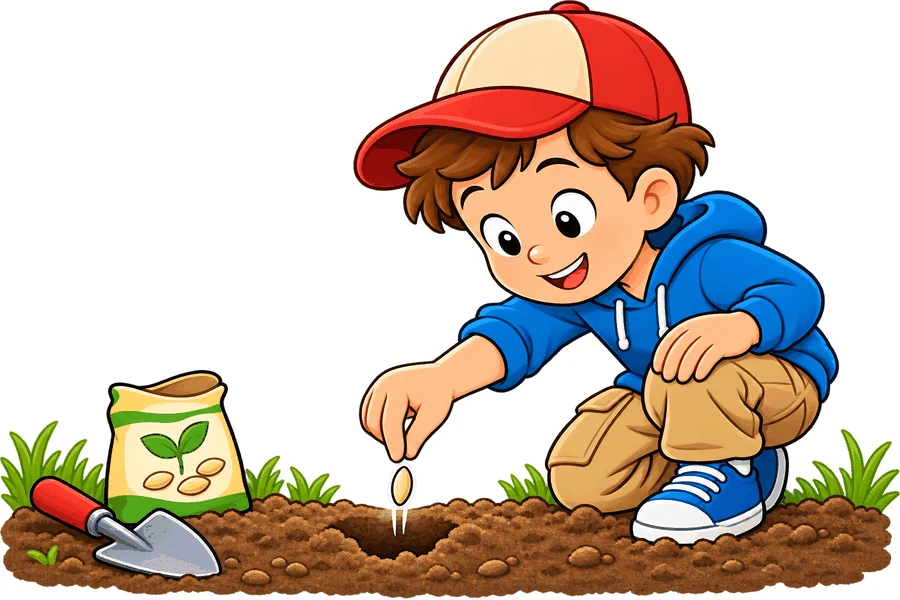
What the sequencing events worksheet covers
Putting events in order sounds simple and is one of the first real comprehension skills a child develops. It requires holding a whole story in mind at once rather than understanding one sentence at a time, which is the step between decoding and reading.
The story here has four steps and a natural order that cannot be argued with: a seed goes in the soil, it gets water, a small plant comes up, a flower grows. Nothing depends on knowing about gardening, and no step could reasonably come before another.
Pictures and sentences ordered separately
The sheet asks for the same ordering twice — once with four mixed-up pictures, once with four mixed-up sentences. That is the design decision worth explaining.
A child who orders the pictures correctly but the sentences wrongly is reading the images rather than the words. That is completely normal in Grade 1 and is useful information for whoever is teaching them. A sheet that only shuffled pictures would never reveal it, and one that only shuffled sentences would be too hard for many children to attempt at all.
The four illustrations share a soil line and a viewpoint on purpose, so the only thing that differs between them is what has changed. A child orders them by reading the change, which is the same reasoning the sentences require.
Why the story is told before it is scrambled
The passage appears at the top in the correct order. Students read it first, then work with the jumbled versions below. Some sequencing worksheets omit this and present only scrambled items, which turns the task into a logic puzzle about seeds rather than a reading exercise.
Reading first also means a child who cannot order the sentences independently can go back and check, which is exactly the strategy they should be learning. Looking back at the text is not cheating; it is what competent readers do.
The words that signal order
"Then" is the only explicit ordering word in the passage, and it marks the last step. The other three have to be ordered by meaning. That balance is deliberate: a passage stuffed with first, next, then and finally lets a child sort the sentences without understanding them at all.
Pointing out "then" afterwards is worth doing, because signal words are genuinely useful and children start using them in their own writing once they notice them.
What a wrong answer tells you
The two common errors say different things. A child who puts the flower before the sprout has not thought about what grows from what, and a quick conversation about a plant they know fixes it. A child who orders the pictures perfectly and the sentences at random is not reading the sentences at all, which is a different problem and needs the matching step below rather than more sequencing practice.
How to use this worksheet
The sheet prints on one page with the answers on a second and takes about fifteen minutes. If a child finds the sentence ordering hard, have them point to the picture that goes with each sentence before writing any numbers — matching is easier than ordering and usually unlocks it.
For related practice, our English worksheets include beginning reader passages, sight word passages and who-what-where comprehension, and the guide to Grade 1 reading passages explains how they build on each other. The Reading Rockets comprehension pages cover the research for parents.
Try these questions online
Answer these five questions about the story and check them instantly.
- What did Ben do first?
- What did Ben do after planting the seed?
- What came up after the water?
- What grew at the end of the story?
- How many steps are in the story?