My Dog Pip
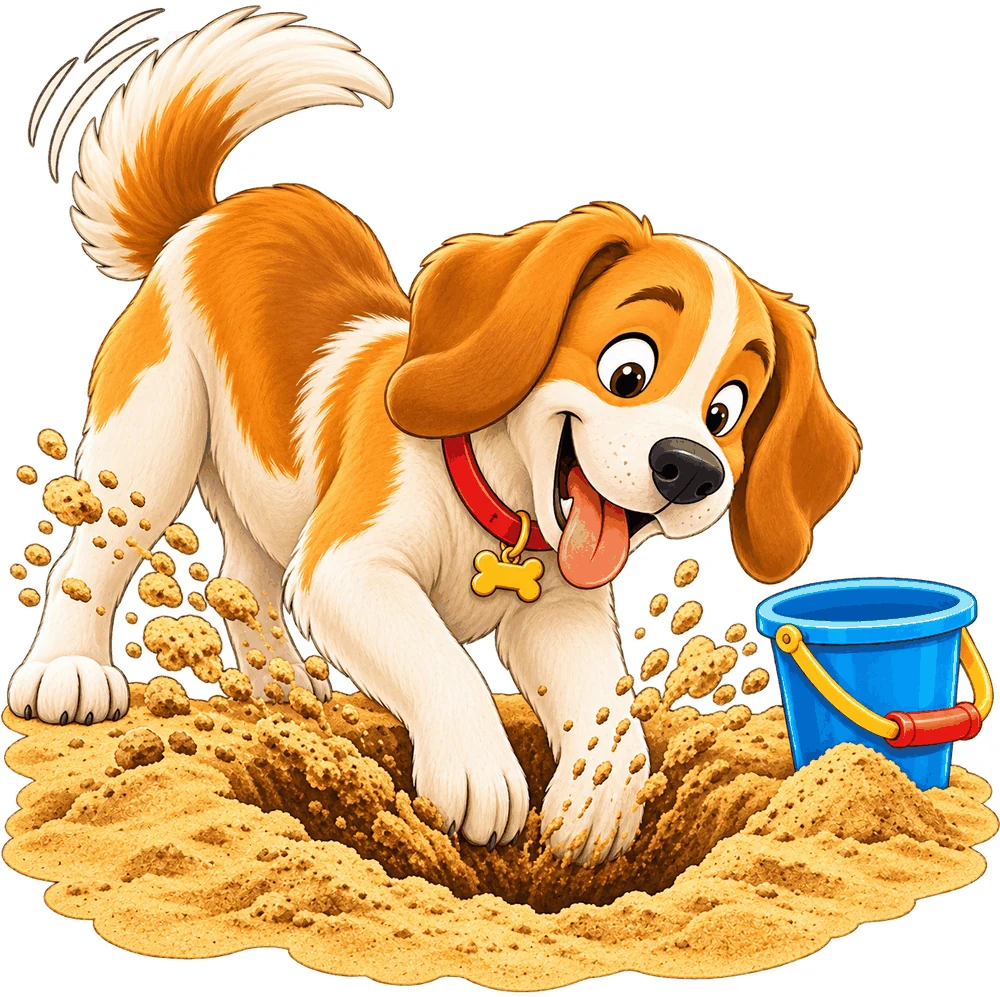
This easy reading passage for Grade 1 gives beginning readers a short illustrated story about a dog digging in the sand, told in sentences of seven words or fewer.
This easy reading passage for Grade 1 is a short illustrated dog story told in sentences of seven words or fewer, with four questions a beginning reader can answer without help.
What makes this an easy reading passage for Grade 1
Ease is not the same as shortness. A passage is easy for a first grader when the sentences are short, the words are mostly ones they can sound out, nothing important happens off the page, and the picture shows what the words say.
This story keeps every sentence to seven words or fewer. A dog called Pip digs in the sand and finds a bucket. There is one character, one place and one thing that happens, so a child spends their attention on reading rather than on keeping track.
Repetition that helps rather than pads
The line "Dig, dig, dig!" is there on purpose. Repeated words give a struggling reader a run of easy success in the middle of the passage, and they make the story fun to read aloud, which is how most children at this level should meet it first.
Repetition also builds fluency. A child who reads "dig" three times in a row is far more likely to recognise it instantly next week than one who met it once. That is the whole argument for easy readers: a child needs many successful encounters with a word, not one difficult one.
Questions that separate reading from writing
The first two questions are circle-the-answer. A beginning reader who understood the story perfectly may still write very slowly, and a worksheet that demands three sentences measures handwriting rather than comprehension. Circling removes that.
The last two ask for a few words. One has a single right answer — Pip finds a blue bucket — and the other asks the child to pick any fact the story gives about Pip. Open questions like that are worth including because they let a child who found the passage hard still finish with something correct on the page.
Matching the picture to the words
The bucket in the story is blue because the bucket in the illustration is blue. That sounds obvious, and it is routinely got wrong in free worksheets, where a picture is dropped in that half matches the text. For a child who is still decoding, a mismatch is genuinely confusing: they use the picture to check their reading, and if the two disagree they conclude they have read it wrong.
Where a child might stumble
The two words most likely to stop a reader here are "finds" and "air". Both are regular enough to sound out, but neither is a word a first grader meets often in print. If a child stalls, say the word and move on rather than working through it letter by letter: the sentence is nearly over and the momentum is worth more than the decoding practice at that moment.
How to use this worksheet
The sheet prints on one page with answers on a second. It takes ten to fifteen minutes. Read it aloud together the first time, then let the child read it alone before answering — hearing it once makes the second read much more fluent and is normal practice at this level rather than a shortcut.
If the child reads this without help, they are ready for a passage with a problem and a solution in it. Our English worksheets have sight word passages, sequencing and who-what-where practice at the next step up, and the guide to Grade 1 reading passages sets out that progression. For the research behind early fluency work, Reading Rockets is a dependable source for parents.
Try these questions online
Answer these five questions about the story and check them instantly.
- What is the dog’s name?
- Where does Pip like to dig?
- What colour is the bucket Pip finds?
- What does Pip have that is long?
- What does Pip have that is big?