The Red Cap
This beginning reader passage worksheet gives Grade 1 students a short illustrated story in simple sentences, followed by two circle-the-answer questions and two short written answers.
This beginning reader passage worksheet gives Grade 1 students a short illustrated story written in the kind of sentences a child who has just started reading can get through on their own.
What the beginning reader passage worksheet covers
A beginning reader passage is not simply a short story. It is written under constraints: sentences of five or six words, mostly words a child can sound out, no clauses stacked inside each other, and a picture that tells the reader what is happening before they have decoded a single word.
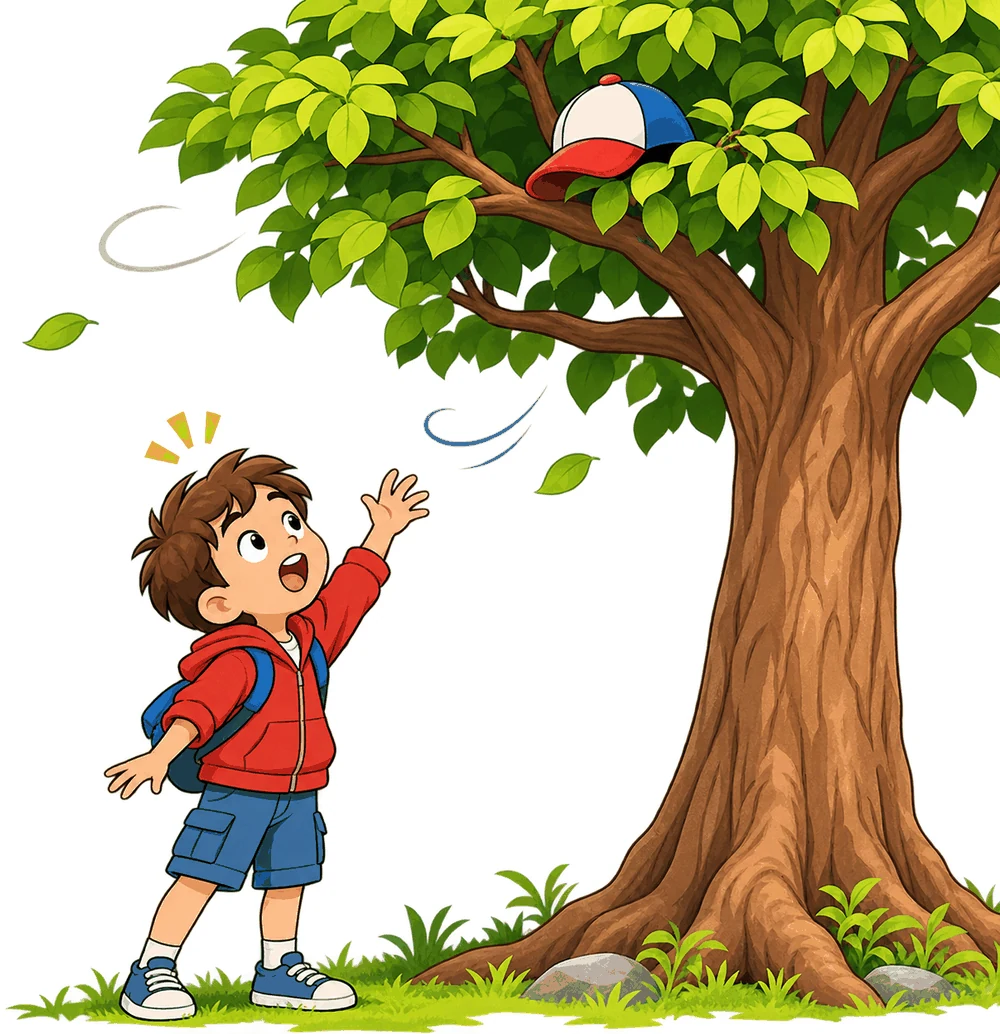
This one is forty words across eight sentences. A boy wears a red cap, the wind blows it into a tree, and he can still see it. There is a clear beginning, a middle and an end, which matters because the comprehension questions depend on the child holding the order of events in their head.
Why the picture does real work
At this stage the illustration is not decoration. A child who stalls on the word "tree" can look at the picture, see where the cap has gone, and keep going. That is reading with support rather than failing, and it is how early readers build the confidence to attempt the next sentence.
It is also why the picture shows exactly what the passage says and nothing extra. An illustration with details the text never mentions invites guessing instead of reading, which is the opposite of what an early reader needs to practise.
Two kinds of question
The first two questions are circle-the-answer. A child who can read the passage but cannot yet write much can still show they understood it, and circling takes the handwriting load out of the way so the answer reflects comprehension rather than pencil control.
The last two ask for a written answer, and one allows a drawing instead. The question about how Sam feels has no single right answer: surprised, sad and worried are all defensible, and the key says so. Early comprehension work should include at least one question where the child's own reading of the situation is what counts.
What to watch for
Two things tell you whether a child is ready for longer passages. The first is whether they can answer a question about the start of the story after reading the end — that is holding a sequence in memory. The second is whether they look back at the text to check, rather than answering from memory. Looking back is a strategy, not cheating, and it is worth saying so out loud.
How to use this worksheet
The sheet prints on one page with the answers on a second, so a parent or teacher can print just the first. It takes about fifteen minutes with an adult nearby, less if the child is reading independently.
If a child stops on a word, read it for them and carry on rather than stopping to sound it out. The purpose of this sheet is understanding the story; decoding practice belongs in a phonics activity where the child is not also holding a plot in mind. That distinction matters more than it sounds, because a child who is corrected on every word loses the thread of the story and then cannot answer anything.
For more at this level, our English worksheets include sight word passages, sequencing and who-what-where practice, and our guide to Grade 1 reading passages explains what to look for as a child moves from decoding to comprehension. The Reading Rockets comprehension pages are a reliable source for parents who want the research behind it.
Try these questions online
Answer these five questions about the story and check them instantly.
- What colour is Sam’s cap?
- What made the cap go up into the tree?
- Where is the cap at the end of the story?
- What does Sam say he will do?
- What is the boy’s name?