The Kite in the Oak Tree
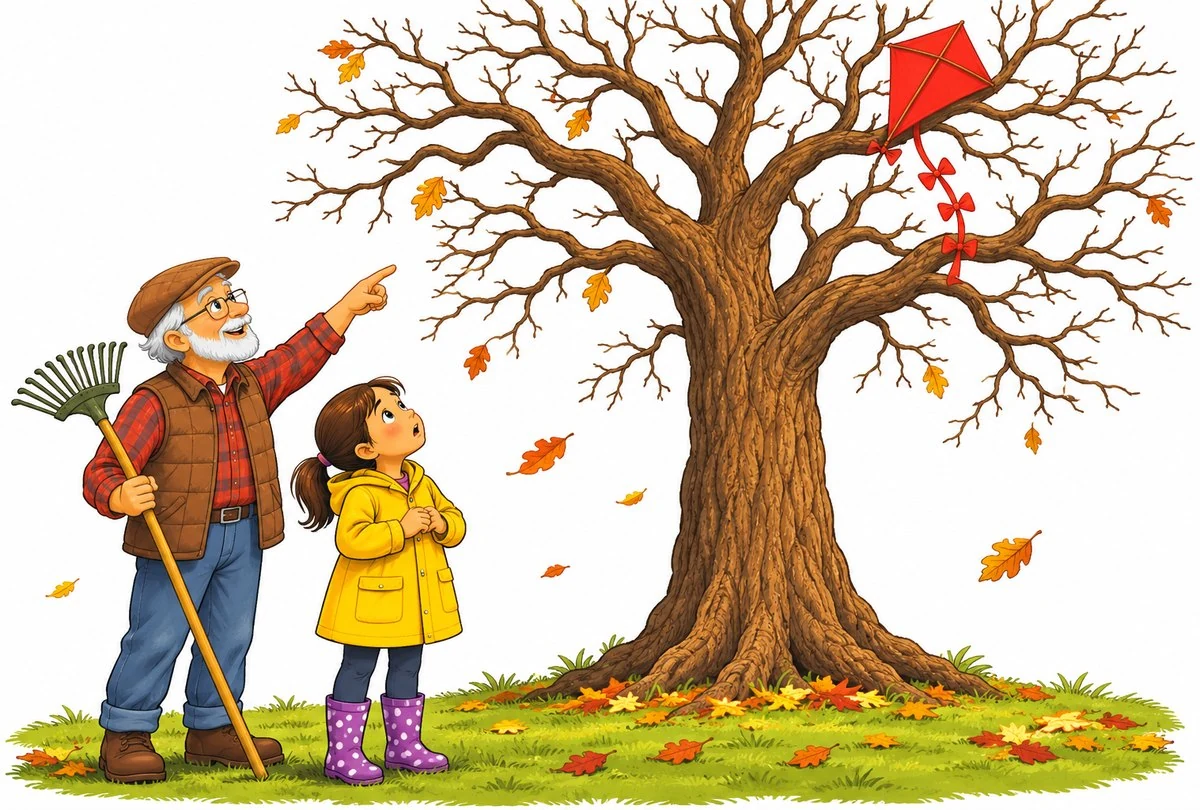
This story reading comprehension worksheet gives Grade 3 students an illustrated short story about a kite caught in an oak tree, followed by eight questions that move from finding facts in the text to working out what a character means.
This story reading comprehension worksheet gives Grade 3 students a short illustrated story and eight questions that start with finding facts and end with working out what a character really meant.
What this story reading comprehension worksheet covers
A fiction passage asks a reader to do two different jobs at once, and Grade 3 is usually where the second one starts to matter. The first job is retrieval: finding a detail that is sitting in the text. The second is inference: working out something the author decided not to say.
Both are on this sheet, and they are deliberately not mixed up. Questions 1, 2 and 4 can be answered by pointing at a sentence. Questions 5 and 7 cannot be answered that way at all, and a child who tries will copy out words that do not answer the question.
Why the paragraphs are numbered
Most Grade 3 readers can decode a two-hundred-word passage comfortably. What they cannot yet do is hold the whole thing in mind while they answer questions about it. Asked to check something, they will reread from the very beginning, lose patience halfway, and answer from memory instead.
Numbering the paragraphs fixes that. Three of the questions name the paragraph the answer lives in, which turns rereading from a chore into a quick, targeted check. The later questions leave the number off on purpose, because by then the student should be deciding for themselves where to look.
The two questions that are not in the text
When Mr. Alvarez says he has had forty years to practise, nothing in the story explains what he means. A student has to put two things together: the tree has taken three of his kites, and he arrives already carrying a rake. Forty years of practice means forty years of getting kites out of that tree.
Question 7 works the same way. The story never says Nora felt grateful. It says the kite floated down into her arms and the neighbour gave her advice for next week. The feeling has to be inferred from what happened, which is exactly the skill the question is testing.
Why the ending is quiet
The problem in this story is solved by a neighbour who happens to be walking past with the right tool, which is not a dramatic ending. That is intentional. A story with a big twist invites a child to answer from excitement rather than from the text, and the questions stop testing reading.
A small, ordinary problem keeps the attention on what the words actually say. It also gives the final question something real to work with: nearly every child has had something stuck somewhere out of reach, so the written response comes from experience rather than invention.
How to use this worksheet
The sheet prints on one page with the answer key on a second, and takes about twenty minutes. Complete sentences are asked for in the instructions, but a correct idea in an incomplete sentence is still a correct reading answer — mark the comprehension first and the sentence second, or the task quietly turns into a handwriting exercise.
If a student struggles with the inference questions, the fix is almost never more reading practice. It is asking them, out loud, what the character knows that we do not. That question transfers to every story they will read afterwards.
For more at this level, our English worksheets include main idea, inference and sequencing passages, and the guide to Grade 3 reading comprehension explains how the skills build on each other. Reading Rockets sets out the research behind asking students to justify an inference.
Try these questions online
Five quick questions about the story. Type an answer and check it instantly.
- What colour was Nora’s raincoat?
- What kind of tree caught the kite?
- What tool did Mr. Alvarez carry?
- How many of his kites had the tree “eaten”?
- On which day of the week does the story happen?