How Honeybees Make Honey
This nonfiction reading passage worksheet gives Grade 3 students a short informational text about how honeybees turn nectar into honey, followed by eight questions that ask them to find key details, name the paragraph an answer came from, and join two facts together to explain something the text does not state directly.
This nonfiction reading passage worksheet gives Grade 3 students a short informational text about how honeybees make honey, with eight questions that all have to be answered from the text itself.
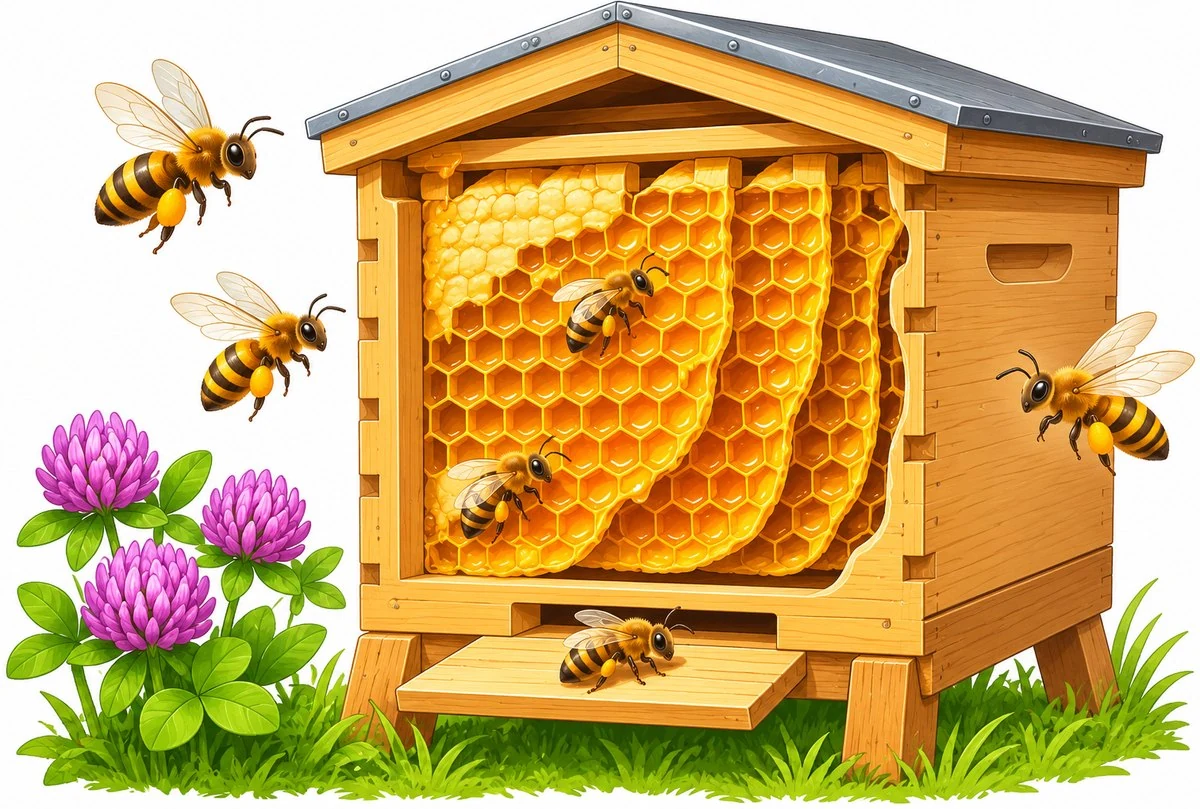
What this nonfiction reading passage worksheet covers
Informational text asks for something different from a story. There is no plot to carry a reader forward and no character whose feelings fill in the gaps, so every answer has to come from the words on the page. That is harder than it sounds for a Grade 3 reader who has spent most of their reading life in fiction.
The passage here follows a single process from start to finish: a bee leaves, collects nectar, brings it home, the water is dried out of it, and the cell is sealed. A process that runs in one direction is the easiest kind of informational text to hold onto, which makes it the right place to start.
Finding the paragraph, not just the answer
Question 6 asks which paragraph explains how the honey is stored. It is the only question on the sheet that has no information in its answer at all — the answer is a number.
That question is there because locating information is a separate skill from understanding it, and it is the one that transfers to every textbook a student will meet later. A child who can say "that was in paragraph 4" can check their own work. A child who cannot has to reread everything every time.
The question the text does not answer
Question 7 asks why honey is thick. The passage never says so directly. It says two separate things: that nectar is mostly water, and that the bees fan the water away. The student has to put those together.
This is the most valuable question on the sheet and the most commonly skipped. If a child says "I can't find it," that is the correct observation and the wrong conclusion — reading the two sentences aloud in order is usually all the help needed.
Why the numbers are at the end
Two million flower visits for one pound of honey, and a twelfth of a teaspoon from one bee's whole life, are the facts students remember from this passage. They are placed in the final paragraph on purpose.
Striking numbers at the start of an informational text pull attention away from the process being explained, and students answer later questions from the number rather than the text. At the end they do the opposite job: they give a reason to care about what was just explained, which is where a nonfiction passage should leave a reader.
Checking the facts
Everything stated in the passage is standard, verifiable information about honeybees: the separate honey stomach, the fanning that removes water, the wax capping, and the hexagonal comb that uses the least wax for the most storage. Students who get curious about one of them should be encouraged to go and check, which is exactly the habit nonfiction reading is supposed to build.
How to use this worksheet
The sheet prints on one page with answers on a second and takes about twenty minutes. Short answers are fine everywhere except question 8, which asks for the student's own words — copying a sentence out of the passage is the one thing that question is designed to catch.
For more at this level, our English worksheets include main idea, inference and sequencing passages, and the guide to Grade 3 reading comprehension explains how those skills fit together. Reading Rockets has further reading on teaching informational text.
Try these questions online
Five quick questions about the passage. Type an answer and check it instantly.
- What sweet liquid does a bee collect from flowers?
- Nectar is mostly what?
- How many sides does a honeycomb cell have?
- What do bees seal the cell with?
- How do house bees dry the nectar?